CategoriesMWB

DMT Classification in Engineering Consultancy

Abu Dhabi, UAE – October 2025 – MWB Design Services LLC proudly announces that its Abu Dhabi branch has been officially licensed by the Department of Municipalities and Transport (DMT) as a classified Civil Engineering Consultancy. This recognition reinforces MWB’s expanding regional footprint and its deep commitment to infrastructure excellence in the UAE.

With this latest classification, MWB further strengthens its role as a prequalified engineering consultancy with RTA Dubai and ITC Abu Dhabi, enabling it to lead large-scale, multidisciplinary Intelligent Transportation System (ITS), SCADA, and Smart Mobility projects across the Emirates.

“We are proud to receive this license from DMT, which formally recognizes our Abu Dhabi operations as a trusted engineering consultancy. It’s another milestone in our journey to deliver world-class, locally compliant infrastructure solutions in line with Vision 2030,” said Amit Agrawal, CEO of MWB Design Services.

Founded in 2019, MWB Design Services is an engineering consultancy company, specializing in Intelligent Mobility, SCADA, ITS design, and AI-powered platform development. The company is recognized for its stakeholder-centric approach, innovation-first mindset, and deep compliance with UAE regulations and Vision 2030 strategies.

CategoriesInsight

Multi-Agent Reinforcement Learning for Intelligent Traffic Management

Urban traffic networks are increasingly complex, with traditional rule-based and centralized traffic signal systems proving insufficient in handling the dynamic and stochastic nature of modern transportation. The need for adaptive, data-driven methods has led to significant interest in Reinforcement Learning (RL) and, more specifically, Multi-Agent Reinforcement Learning (MARL) for traffic signal control.

Reinforcement Learning and Traffic Optimization

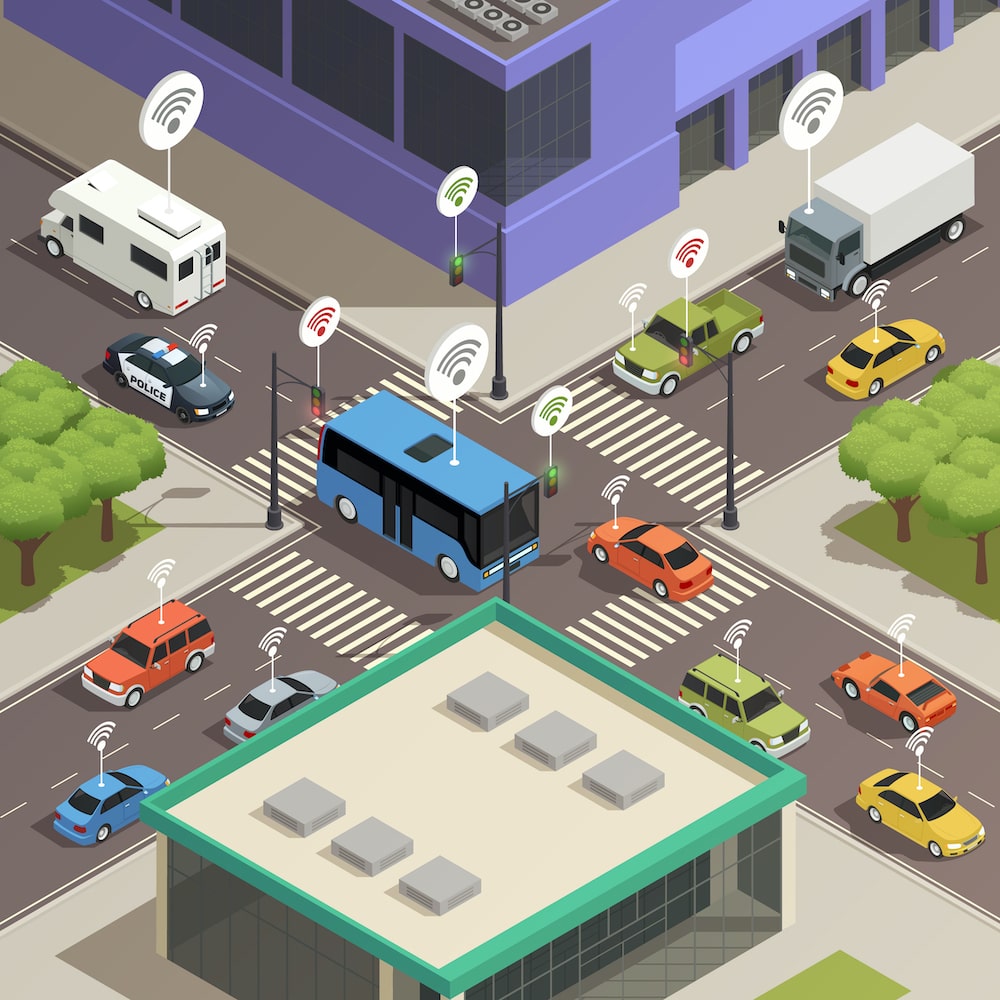
In RL, agents learn policies that maximize cumulative rewards through interaction with an environment. Applied to traffic systems, the environment is the road network, the agents are traffic lights, actions correspond to phase switching, and rewards reflect system performance metrics such as reduced waiting time, minimized queue lengths, or improved throughput. Unlike static or pre-timed control strategies, RL-based controllers can adapt to fluctuating traffic conditions in real time.

Multi-Agent Systems for Distributed Control

Urban traffic is inherently decentralized. Each intersection has localized conditions but is also interdependent with surrounding intersections. This makes a Multi-Agent System (MAS) approach natural. In MAS, multiple agents learn and coordinate simultaneously, balancing local optimization with global efficiency.

MARL addresses several core challenges:

  • Scalability: Single-agent RL approaches struggle when applied to large-scale networks. MARL distributes learning across multiple intersections.
  • Decentralization: Local decision-making reduces reliance on a central controller and enhances resilience.
  • Adaptability: Agents can dynamically adjust to emergent traffic conditions, accidents, or non-recurrent congestion.

Simulation as a Research Testbed

Testing MARL systems in live traffic networks is impractical without rigorous evaluation. Simulation environments are therefore critical. The Simulation of Urban Mobility (SUMO) platform has become the standard tool for traffic AI research. SUMO enables realistic modeling of traffic flows, intersection designs, and vehicle behaviors. Researchers can simulate diverse traffic conditions, including rush hours, stochastic events, or network disruptions, and measure the performance of MARL policies across scenarios.

Key performance indicators typically include:

  • Average waiting time per vehicle
  • Queue length at intersections
  • Network-wide throughput and congestion metrics

Simulation provides a controlled environment for training MARL policies while enabling robust evaluation before deployment in real-world systems.

Deep Reinforcement Learning Methods in MARL

The complexity of urban networks makes traditional RL insufficient due to high-dimensional state and action spaces. Deep Reinforcement Learning (DRL) methods, particularly Deep Q-Networks (DQN) and Actor–Critic frameworks, have proven effective for traffic control.

  • DQN: Extends Q-learning by approximating value functions with deep neural networks. This enables efficient learning in large state spaces, such as varying traffic densities and multi-lane configurations.
  • Actor–Critic: Separates the policy (actor) and value function (critic). The actor selects actions, while the critic evaluates them, stabilizing learning and improving convergence in multi-agent contexts.

Hybrid models combining DQN and Actor–Critic approaches have demonstrated improved performance in coordinating multiple intersections while maintaining stability in training.

Coordination and Communication Among Agents

A critical research challenge in MARL traffic management is coordination. Agents must balance local optimization (minimizing queues at their own intersection) with global network performance. Approaches to coordination include:

  • Independent Learners: Agents optimize policies independently but often converge to sub-optimal global behaviors.
  • Centralized Training with Decentralized Execution (CTDE): Agents are trained with access to global information but operate with local observations during deployment.
  • Explicit Communication Protocols: Agents share selected state or reward signals with neighbors to synchronize decision-making.

CTDE has emerged as an effective compromise, allowing scalability while ensuring agents learn cooperative strategies during training.

Performance Outcomes in Simulations

Experimental results using MARL for traffic control frequently demonstrate significant performance gains compared to baseline policies such as fixed-time or actuated signals. Reported improvements include:

  • Up to 60–70% reduction in average waiting time.
  • Queue length reductions that translate into higher throughput.
  • Enhanced adaptability to demand fluctuations across training episodes.

[Source: Frontiersorg.in Journal on MARL Framework]

Moreover, MARL approaches consistently outperform centralized RL methods in scalability tests, maintaining efficiency when applied to larger and more complex traffic networks.

Practical Considerations and Challenges

Despite promising results, deploying MARL-based traffic control in real urban environments faces several challenges:

  • Data Availability: High-resolution traffic data is necessary for both training and real-time inference.
  • Computational Requirements: Training MARL models on large-scale simulations demands significant computational power.
  • Safety and Interpretability: Learned policies must be robust and interpretable to meet regulatory and operational requirements.
  • Integration with Legacy Infrastructure: Existing traffic management systems are heterogeneous, and seamless integration with MARL solutions requires careful design.

Research continues to address these challenges, with an increasing focus on transfer learning, domain adaptation, and safety-aware RL.

Toward Adaptive and Scalable Traffic Systems

As urban mobility demands grow, MARL presents a scalable and adaptive framework for intelligent traffic signal control. By leveraging simulation platforms like SUMO, advanced deep RL algorithms (DQN, Actor–Critic), and multi-agent coordination strategies, researchers have demonstrated that decentralized, learning-based systems can significantly outperform traditional methods.

While real-world deployment will require careful alignment of data, computation, and infrastructure, the trajectory of research suggests that MARL will play a central role in the next generation of intelligent transportation systems.

We, at MWB, love to deal with MARL challenges

Deploying a MARL-based traffic management model at scale demands not just powerful algorithms and realistic simulations, but also robust, trustworthy field deployment — and this is where MWB offers tangible value. MWB specializes in deploying cutting-edge technologies to enhance traffic management, improve safety, and streamline public and private transportation. By integrating their technological infrastructure and domain expertise with your MARL framework, simulations (e.g., via SUMO), and RL strategies like DQN and actor–critic methods, cities can transit from controlled simulations to live, operational deployments. MWB can recommend the host real-time data aggregation, signal coordination, and adaptive control logic, all while ensuring alignment with safety and operational protocols to build a powerful pipeline from simulated learning to real-world efficiency.

About the Author

CategoriesMobility AI Smart Cities

The Convergence of IoT, Edge–Cloud and Big Data in Smart Cities

As cities worldwide accelerate their digital transformation, the integration of IoT-enabled infrastructure, Big Data analytics and edge–cloud architectures have become cornerstone of intelligent urban ecosystems. These domains — individually potent — unleash exponential value when deployed in a unified, interdependent framework.

1. IoT-Enabled Infrastructure: Foundational Data Fabric

Modern urban systems are increasingly embedded with sensors, actuators, PLCs, RTUs, RFID, LIDAR, GPS, and V2X modules across mobility, utilities, and public safety domains. These devices collectively generate petabyte-scale telemetry, often at sub-second intervals. For instance, a mid-sized ITS deployment in Abu Dhabi can generate over 3 TB/day of raw sensor data across just 50 signalized intersections.

But without contextualization, raw IoT data has limited utility. That’s where downstream analytics, simulation models, and decentralized verification mechanisms enter the equation.

2. Big Data Analytics: Deriving Intelligence from Noise

The heterogeneity and velocity of smart city data call for a robust data lake–based architecture, integrating Apache Kafka, Flink, Hadoop, and NoSQL stores (e.g., Cassandra, MongoDB) with scalable ML pipelines.

Using predictive analytics and unsupervised learning, anomalies such as energy leakages, traffic bottlenecks, or air quality violations can be detected in real time. A recent MWB POC showed a 17% expected improvement in traffic throughput using AI-derived adaptive signal control based on fused IoT data and historic trends.

3. Edge–Cloud Continuum: Low Latency Meets Scalability

Latency-sensitive operations like real-time traffic control or autonomous vehicle handoffs demand processing at the edge (via NVIDIA Jetson, ARM Cortex, or custom FPGA setups), while historical model training, dashboarding, and policy simulations reside in cloud environments (AWS, Azure, G42).

5G and TSN (Time-Sensitive Networking) further enhance edge responsiveness, reducing latency to under 10 ms, critical for emergency response coordination or dynamic rerouting in congested corridors.

The Role of Digital Twins in Simulating the Urban Nervous System

Digital twins — dynamic, virtual representations of real-world assets — are central to scenario testing and failure prediction. Using platforms like CityIQ or Siemens NX, urban planners can model an entire city block’s mobility footprint, incorporating real-time IoT feeds, BIM data, and simulation loops.

A digital twin can be created to simulate a multi-junction arterial corridor, enabling scenario planning for lane closures, signal failures, and V2X-based rerouting.

Can Blockchain help?

Blockchain acts as a tamper-proof ledger for transactional and operational records — vital for multi-stakeholder environments like smart parking, permit management, or EV charging. Platforms like Hyperledger Fabric or Polygon Edge allow decentralized identity, immutable logging of asset state changes, and smart contract–based automation.

For example, a forward-looking smart WIM (Weigh-in-Motion) station could use blockchain to timestamp axle weight data, ensuring regulatory compliance and auditability with zero centralized trust dependency.


Smart cities of today and future demand multi-domain architectural thinking. The fusion of real-time IoT sensing, distributed analytics, digital mirroring, and decentralized trust is not just a future ideal but it’s a present imperative. MWB continues to integrate these paradigms to architect scalable, intelligent urban systems aligned with UAE Vision 2030 and beyond.

CategoriesITS Sustainability

A Strategic Outlook: EV Charging Ecosystem in Middle East

As the world races toward cleaner and smarter mobility, the Middle East is stepping on the accelerator. Electric vehicles (EVs) are no longer just a trend – they’re fast becoming a pillar of the region’s sustainable future.

Governments are acting with intent. The UAE has already converted nearly 20% of federal government vehicles to electric and aims for 30% of public sector fleets and 10% of all vehicles to be electric or hybrid by 2030. Saudi Arabia has set an ambitious target of 30% EV adoption in Riyadh by the same year. Similar ambitions are emerging across Oman, Bahrain, and Kuwait, supported by renewable energy targets and smart city plans.

But here’s the big question:
Is the EV charging ecosystem scaling fast enough to match this momentum?

Behind every successful EV rollout lies a strong location strategy, policy support, and usage trend analysis. For investors and stakeholders, these aren’t just operational details – they’re the foundation of a profitable and sustainable EV future in the region.

The GCC’s EV charging market is projected to grow from $2.04 billion in 2024 to $5.58 billion, reflecting a CAGR of 18.3% (Research and Markets). In the UAE alone, EVs could make up 25% of new vehicle sales by 2035 (PwC).

While consumer interest grows, the gap in high-speed, reliable, and accessible charging stations threatens to hold back adoption. This gap is where the most lucrative and strategic investment opportunities lie.

Planning Smart: The Importance of Location Strategy

To meet growing EV demand and support net-zero goals, location is everything. Strategic site selection doesn’t just boost convenience – it drives ROI by maximizing charger utilization and reducing infrastructure redundancy.

And while urban hubs often take center stage, rural and less-populated areas can’t be overlooked. Expanding access across all regions helps combat range anxiety and accelerates adoption. Smart location planning requires:

Maximize Utilization: Place chargers where demand is consistent to ensure high turnover and faster ROI.

Destination Charging: Install at high-dwell locations such as shopping malls, cafes, supermarkets, office, parking lots, parks, and highways where EV drivers naturally spend time

Think Beyond Cities: Rural and suburban coverage is key to building confidence among drivers.

Plan Around Constraints: In urban centres with limited space for grid upgrades, strategic deployment is even more critical.

Policy and Regulatory Drivers

Governments across the globe are stepping up to fast-track the electric vehicle revolution. From policy incentives to infrastructure mandates, public sector backing is stronger than ever.

Incentives & Subsidies: Grants, low-interest loans, and installation cost offsets to encourage adoption across municipalities and private developers.

Infrastructure Integration: Mandate EV charging inclusion in new construction, commercial buildings, smart parking facilities, and highway rest stops.

Banking Support: Financial institutions can step in with discounted interest rates, reduced processing fees, and flexible financing for chargers and accessories.

Public-Private Partnerships: Fast-track deployment through collaborative investments between governments, utilities, and private companies.

OEM Engagement: Attract automakers to the region to lower vehicle and charging costs, making EV ownership more accessible.

Public vs. Private Charging: Usage Patterns and Priorities

If mass EV adoption is the goal, public charging infrastructure is the gateway. It fills the gaps where private charging isn’t practical. It also plays a critical role in building trust and convenience for everyday drivers.

Here’s what’s driving public charging behaviour and where the returns lie:

Urban Demand is Surging: City centres see the highest need for public chargers due to limited private parking and home charging options. Stations in dense areas often achieve top-tier utilization, making them a smart investment with high ROI.

Highway Fast Charging: Chargers along intercity routes serve long-haul drivers and EV fleets gives users range confidence. Backed by government funding and paired with retail or rest stops, these hubs offer strong and predictable usage and make EVs viable for long-distance travel.

Home Charging is the Backbone: Most EV drivers charge overnight at home. It’s convenient, cost-effective, and ideal for daily top-ups. While direct profit is limited, bundling with smart grid or solar services creates added value.

Fleet Charging is a Commercial Power Play: Fleets such as delivery vans to taxis are shifting fast to EVs. Centralized depot charging with consistent, high-volume use delivers rapid ROI and makes fleet electrification a no-brainer for operators.

Infrastructure Challenges and Opportunities

While the EV revolution is racing ahead, the road isn’t without its bumps. From overloaded grids to inconsistent charging speeds, the technology powering EV infrastructure faces real-world limitations. But with the right solutions, these challenges become opportunities to lead.

Grid capacity and load management: Even the best EV chargers fail if the grid can’t handle the load. Many areas aren’t built for multiple fast chargers, causing delays, blackouts, and costly upgrades. At MWB, we conduct grid impact assessments and design smart charging frameworks to reduce strain, cut costs, and speed up deployment.

Limited Charging speeds: Fast chargers can fall short due to battery limits and weak power supply, causing slowdowns and reduced charger turnover. At MWB, we use GIS mapping and data modelling to pinpoint high-demand locations optimizing performance, user experience, and ROI.

Hardware reliability and maintenance: Frequent breakdowns from cheap hardware or poor maintenance don’t just frustrate drivers- they lead to underused assets and sunk costs. At MWB, we ensure reliability with tailored O&M plans, smart vendor selection, and remote diagnostics that keep chargers up and running.

MWB Powers the Shift

MWB provides comprehensive support to investors, developers, and utilities through a full-stack advisory and engineering offering. Their services encompass site selection and GIS-based planning, electrical infrastructure and load assessments, demand forecasting and financial modelling, as well as deployment planning and vendor advisory. MWB also guides clients through policy, permitting, and compliance processes, while offering strategic support for operations, maintenance, and uptime optimization.

Special Mention: This article has been co-authored by Prohit Keshavlal.

Meet The Author

CategoriesMWB

MWB wins top UAE Business Award 2025

Abu Dhabi, UAE – August 2025 – MWB Design Services LLC has been named “Best Engineering & Mobility Technology Consultancy – UAE” at the 2025 UAE Business Awards, an annual program hosted by MEA Markets that honors organizations shaping the region’s business future through innovation and performance.

This award reflects MWB’s role as a trailblazer in delivering next-generation mobility solutions, blending engineering excellence with AI, SCADA integration, and data-driven transport technology. The company’s growing portfolio spans smart city infrastructure, intelligent traffic systems, and strategic advisory for digital transformation in transport.

“We’re proud to represent the UAE in delivering technologies that enhance connectivity, sustainability, and national progress,” said Sandeep Singh, Director of ITS & Technology at MWB.”

MWB has supported government authorities and private developers alike across a diverse range of impactful projects—ranging from tunnel SCADA systems to AI-based traffic signal design and real-time congestion analytics.

With a strong foundation built on regional prequalifications (RTA, ITC, DMT and others), MWB continues to lead from the front as a trusted consultancy in the UAE’s smart mobility transformation.

About MEA Markets’ UAE Business Awards

The UAE Business Awards spotlight organizations that show outstanding achievement across innovation, service delivery, and sustainable growth in the Emirates’ economic landscape.

CategoriesMWB

MWB In News – Business Insider

Abu Dhabi, UAE – July 2025 – MWB Design Services LLC has been awarded the prestigious 2025 Global Recognition Award for its outstanding contributions to Urban Mobility Technology and Intelligent Transportation Systems (ITS) across the Middle East.

Announced via Business Insider, the award honors MWB’s pioneering work in AI-powered smart mobility platforms, SCADA system integration, and its impact on shaping future-ready transportation infrastructure in alignment with UAE Vision 2030.

“This recognition validates the innovation, dedication, and excellence that our team brings to every project. We’re proud to represent the UAE on the global stage as leaders in mobility engineering and technology,” said Manjyot Anand, Head of ITS & Technology at MWB.

MWB has rapidly emerged as a trusted engineering consultancy, prequalified by RTA Dubai, ITC Abu Dhabi, and other regional authorities, with a proven track record across projects. MWB is leveraging its deep technical stack—covering AI, V2X, IoT, SCADA, and predictive analytics—to drive sustainable, connected, and resilient transportation networks across the region.

About the Global Recognition Award

The Global Recognition Awards™ honor companies making significant contributions in innovation, leadership, and impact across industries worldwide.

CategoriesNews

Dubai RTA Initiates Phase II of Intelligent Traffic Systems Study

In alignment with the visionary directives of His Highness Sheikh Mohammed bin Rashid Al Maktoum, Vice President and Prime Minister of the UAE and Ruler of Dubai, aimed at broadening the scope of Intelligent Traffic Systems (ITS) and bolstering Dubai’s ambition to become the smartest city in the world, Dubai’s Roads and Transport Authority (RTA) has embarked on the study and design of Phase II of the ITS Improvement and Expansion Project.

(more…)
CategoriesNews

Dutch Company Integrates EVs with V2G

Dutch car sharing firm MyWheels will plug in the first of 500 grid-connectable Renault EVs to its fleet in the Netherlands, expanding the number of vehicles in Europe capable of strengthening the power grid as the technology gains traction.
Vehicle-to-grid technology, known as V2G, allows electric vehicles to store power and provide it to the electricity grid at times of peak demand. The technology has  become commercially viable after the introduction of smart charging technology and batteries able to sustain intensive usage.
(more…)
CategoriesNews

BMW and Toyota Race to Put First Flying Car

The future is nowish. Popular automakers — including BMW & Toyota — are racing to get their new flying car models on the market with a new age of travel on the precipice of taking off. The new category of aircraft has been termed eVTOL — which is an acronym for “electric vertical take-off and landing,” in reference to the way the vehicles are able to fly.

eVTOLs take off and land vertically and have the ability to hover — making them more akin to helicopters than cars or planes.

There is a wide range of concepts presented by the different companies with each modeling their own version of the future of air travel.

(more…)

MWB is leading AI Technology Solution Consulting company with multi-located offices and operations in GCC and abroad.

Copyright © 2016-2025 MWB Design Services . All Rights Reserved.