
Author: MWB Team
The MWB Editorial Team is the collective voice behind all content, news, and updates published on the MWB website. We are a dedicated group of writers, editors, and researchers committed to providing accurate, timely, and relevant information.
For any corrections, feedback, or inquiries, feel free to reach out to us at info@mwb-me.com.

byMWB Team
Bridgestone and Webfleet Drive AI and EV Fleet Innovations
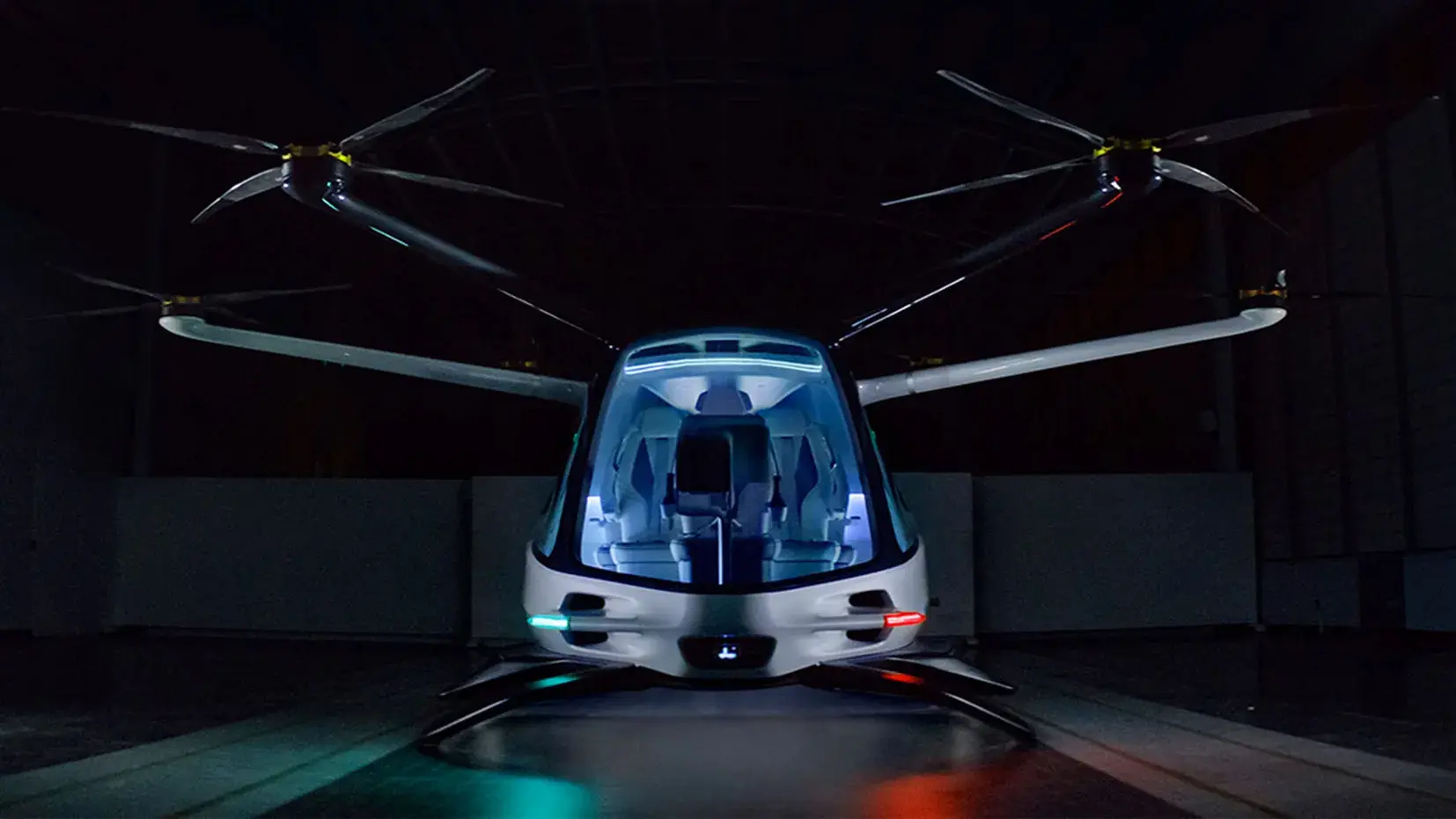
As the global mobility landscape races towards a smarter, cleaner future, Bridgestone and its award-winning fleet management solution, Webfleet, are revving up at MOVE 2025 to spotlight cutting-edge innovations that promise to reshape the future of connected, electric, and data-driven mobility.

byMWB Team
Toyota and NTT Invest $3.3 Billion in AI Platform Development
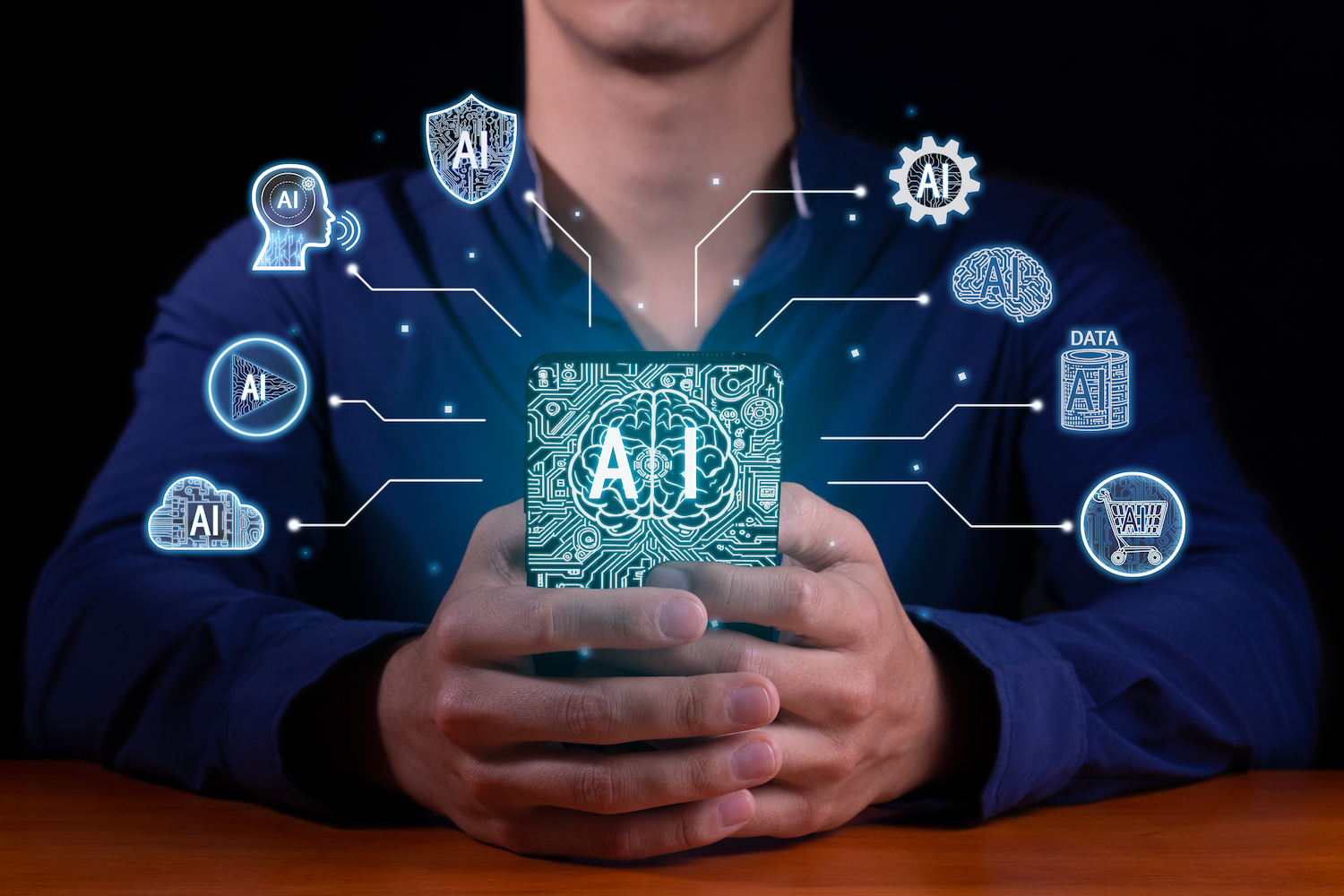
Toyota Motor and Nippon Telegraph and Telephone (NTT) plan to invest a total 500 billion yen ($3.27 billion) by 2030 into an infrastructure and software platform using artificial intelligence to reduce traffic accidents.
The automaker and telecommunications firm said in a joint statement on Thursday they want to develop a mobility AI platform that uses large amounts of data to support driver assist technology, aiming to have a system ready by 2028.
byMWB Team
Edge AI with IoT in Smart Mobility Solutions
The convergence of Edge AI and the Internet of Things (IoT) is revolutionizing smart mobility solutions by enabling real-time, low-latency decision-making critical for Intelligent Transportation Systems (ITS). This synergy is essential for applications like vehicle-to-everything (V2X) communication, autonomous vehicles, and smart parking systems, where responsiveness and scalability are paramount.
Before we dive deep:
Edge AI: Edge AI refers to deploying artificial intelligence (AI) algorithms directly on edge devices, such as sensors, cameras, and embedded systems, rather than relying on cloud computing. Key benefits include reduced latency, enhanced privacy, and real-time processing.
Internet of Things (IoT): IoT connects physical devices, enabling them to collect and exchange data. When integrated with Edge AI, IoT systems can process data locally, making them more efficient and responsive.
Why Edge AI for Smart Mobility?
Smart mobility solutions demand immediate responses to dynamic conditions, such as traffic congestion, pedestrian crossings, and emergency vehicle prioritization. Edge AI enables low latency in processing data at the source minimizing delays, high reliability wherein the systems can operate independently of network connectivity, and scalability as the local processing reduces the load on centralized cloud resources.
Applications of Edge AI and IoT in Smart Mobility
- Vehicle-to-Everything (V2X) Communication: V2X encompasses communication between vehicles, infrastructure, pedestrians, and the network. Edge AI enhances V2X through Collision Avoidance by processing the sensor data in edge devices installed in the vehicles, Traffic Signal Optimization with AI adjusted timings dynamically based on the real-time traffic conditions and Hardware Platforms e.g. NVIDIA Jetson AGX Xavier is commonly used in V2X systems for real-time perception and decision-making.
- Autonomous Vehicles: Autonomous vehicles rely heavily on Edge AI to process vast amounts of data from LiDAR, cameras, and other sensors. The outcome is used for Object Detection and Tracking wherein Edge AI processes camera feeds to identify pedestrians, vehicles, and obstacles, Path Planning to find optimal routes based on the road conditions as per the real-time algorithms calculations and Hardware Platforms which includes devices like NVIDIA Jetson Orin and Intel Movidius to facilitate high-performance AI computation at the edge.
- Smart Parking Systems: Edge AI transforms parking infrastructure by enabling Occupancy Detection wherein IoT sensors embedded in parking spots detect availability in real-time, Dynamic Pricing to optimize pricing based on demand and occupancy rates and Hardware Platforms like Raspberry Pi 4 with AI accelerators like Coral TPU provides cost-effective solutions for parking management.
Technical Architecture
A typical Edge AI-IoT architecture for smart mobility includes:
- Sensors: LiDAR, cameras, and ultrasonic sensors collect raw data
- Edge Devices: Devices like NVIDIA Jetson process data locally, running AI inference models.
- Connectivity Modules: 5G, DSRC, and LoRa facilitate communication between devices and infrastructure.
- Cloud Integration: While primary processing occurs at the edge, the cloud is used for long-term storage and analytics.
However the real challenge lies in Hardware Limitations because of the limited computational power in the Edge devices compared to the cloud systems, which can be addressed by specialized hardware accelators like GPUs and TPUs designed for AI workloads.
Another challenge lies in the data privacy and security because the Edge AI systems must secure the sensitive data locally. In addition, integrating thousands of devices in urban environments can strain resources. However, with the advent of newer encryption protocols the boot processes can be secured on edge devices and lightweight AI models can be leveraged for scalability.
“At MWB, we see the convergence of Edge AI and IoT as a pivotal force in shaping smart urban mobility—creating systems that not only adapt in real-time but also set new benchmarks for efficiency, safety, and sustainability.”
Director, ITS & TECH – MWB
Future Trends in Edge AI and IoT for Smart Mobility
We, at MWB, believe that the learning in this space is going to evolve tremendously in the coming years. We see already “Federated Learning”, which enables collaborative training of AI models across edge devices without sharing raw data. There is enormous amount of research and development in the area of Energy-Efficient AI for the development of low-power AI models to extend the battery life of edge devices. The “Integrated V2X Ecosystems” allow Seamless integration of edge AI and IoT with urban digital twins for predictive traffic and infrastructure management.
For further discussions around this and to know more about it, reach out to us at info@mwb-me.com
byMWB Team
First Level 4 Autonomous Baggage Towing in Japan
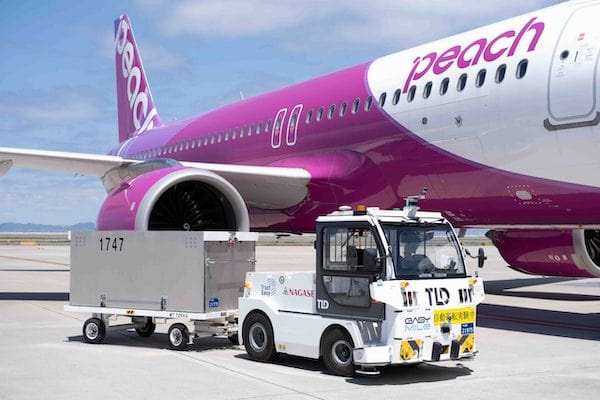
TractEasy, leading distributor of autonomous material handling solutions driven by EasyMile’s technology, has announced its EZTow autonomous tow tractor in the first-ever Level 4 autonomous driving operation for Ground Support Equipment (GSE) vehicles at Kansai International Airport.
The trial is being conducted in collaboration with Peach Aviation Limited, Panasonic Holdings Corporation, NAGASE TECHNO SERVICE CO., LTD., and Kansai Airports.
It is taking place within the ramp area of Terminal 2 and marks the first time Level 4 autonomous GSE operations are being trialed at Kansai Airport. The objective is to assess the practical application of autonomous towing vehicles in a live airport environment.
This initiative follows a remote-controlled vehicle test conducted at Kansai Airport in April 2023. The current trial advances this work by integrating higher levels of autonomy, with the aim of exploring how such technologies can support labor savings and improve operational flow in airport ground handling.
In the long term, combining autonomous and remote-controlled systems could offer flexible fleet management solutions across multiple airport sites.
The trial is being conducted in collaboration with Peach Aviation Limited, Panasonic Holdings Corporation, NAGASE TECHNO SERVICE CO., LTD., and Kansai Airports.
It is taking place within the ramp area of Terminal 2 and marks the first time Level 4 autonomous GSE operations are being trialed at Kansai Airport. The objective is to assess the practical application of autonomous towing vehicles in a live airport environment.
- System Features: Onboard LIDAR-based detection, autonomous navigation, and remote operation fallback
- Use Area: Vehicular traffic zones and apron areas at Terminal 2
This initiative follows a remote-controlled vehicle test conducted at Kansai Airport in April 2023. The current trial advances this work by integrating higher levels of autonomy, with the aim of exploring how such technologies can support labor savings and improve operational flow in airport ground handling.
In the long term, combining autonomous and remote-controlled systems could offer flexible fleet management solutions across multiple airport sites.
“This initiative will reduce the time between aircraft arrival and the start of baggage return to contribute to major groundbreaking in labour and workforce efficiency in ground handling operations” Company RepresentativeSource: FutureTransport-News
byMWB Team
Driverless bus is tested in Barcelona
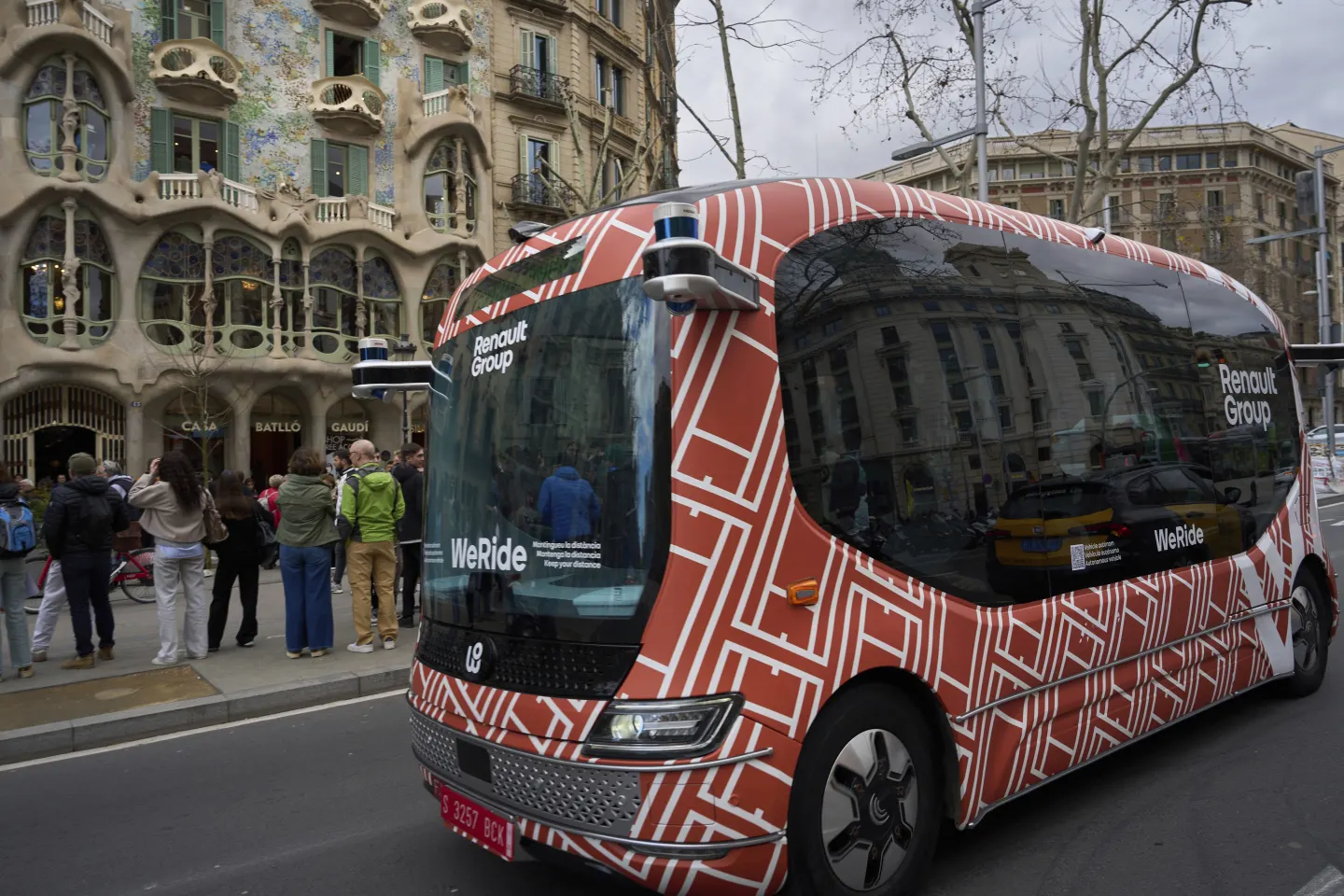
Commuters in downtown Barcelona will be able to ride the bus for free soon. There’s just one catch: this mini-bus has no one at the wheel. The bus pulls away from the stop with its passengers on its own, brakes before changing lanes and eases down one of Barcelona’s most fashionable boulevards.
Renault is testing a new driverless mini-bus in Barcelona. The autonomous vehicle runs on a 2.2-km (1.3-mile) circular route with four stops in the center of the Spanish city. Adventurous commuters can jump on free of charge.
The French carmaker has teamed up with WeRide, a company specializing in autonomous vehicles, to make the prototype. It unveiled the driverless bus at the French Open venue last year, but now it is testing it on the open road in Barcelona. It also has testing projects going in Valence, France, and at the Zurich airport.
Pau Cugat was one of the curious to step aboard for a short ride along Passeig de Gracia boulevard.
“We just passed by a regular, combustion-engine city bus, and I thought, ‘Look, there is a bus of the past, and right behind it you have the bus of the future,’” the 18-year-old student said.
“The US is doing a lot of experimentation with autonomous vehicles, the same thing in China, Until now we don’t have a lot in fact in Europe. And this is why we want to show that this works and prepare Europe to this route in public transportation.”
Patrick Vergelas, Head of Renault’s AutoNOmous Mobility Projects
Driverless taxis and buses are being tried out by companies in other cities, from San Francisco to Tokyo. But Renault’s initiative comes as Europe generally lags behind the United States and China in driverless vehicle technology, where companies are fiercely competing to get ahead.
The electric bus can run for 120 kilometers without a recharge and reach 40 kilometers per hour (25 mph). It is equipped with 10 cameras and eight lidars (sensor arrays) to help it navigate the streets filled with cars, motorbikes and pedestrians. The company says the bus is able to drive safely on a given course through a busy downtown like that of bustling Barcelona.
Source: AP News
byMWB Team
Engineering Excellence in Complex Urban Infrastructure Projects
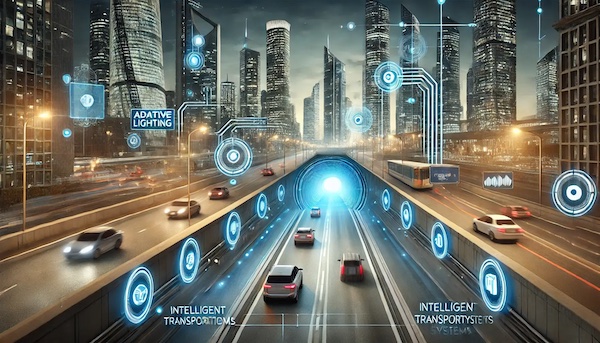
Urban infrastructure projects represent some of the most ambitious engineering undertakings, requiring innovative solutions and multidisciplinary collaboration to address challenges like traffic congestion, environmental impact, and safety. At MWB, we have developed a robust approach to delivering excellence in complex projects, such as undersea tunnels, multi-level junctions, and innovative designs—leveraging Intelligent Transportation Systems (ITS), SCADA, and other advanced technologies.
The Challenges of Modern Urban Infrastructure
Modern cities face ever-growing demands on their infrastructure. With increasing urbanization, traffic congestion, and environmental sustainability concerns, infrastructure projects are no longer just about building roads or bridges; they are about creating intelligent systems that integrate seamlessly into urban ecosystems. Some of the key challenges include:
- Space constraints: Projects like multi-level junctions must maximize utility within limited urban spaces.
- Environmental sensitivity: Undersea tunnels require designs that minimize ecological disruption while maintaining structural integrity under extreme conditions.
- Safety and efficiency: High-traffic areas demand systems that ensure smooth flow and rapid incident response.
- Scalability: Infrastructure must accommodate future growth without requiring constant overhauls.
Leveraging ITS for Smarter Solutions
Intelligent Transportation Systems (ITS) integrate advanced communication, computation, and sensor technologies to optimize traffic flow, reduce emissions, and enhance safety for smarter infrastructure. It enables real-time monitoring of vehicle movement, air quality, and tunnel integrity along with Incident Detection Systems, which is integrated with adaptive lighting and ventilation to improve safety while reducing energy consumption within under-sea tunnels. It enables dynamic traffic signals and lane management systems to optimize traffic flow based on real-time data and predictive analytics to reduce bottlenecks for enhancing the commuter experience. ITS enabled innovative designs allow automated tolling and congestion pricing to encourage better traffic distribution.
In addition, Supervisory Control and Data Acquisition (SCADA) systems are vital for managing the complexity of large-scale infrastructure. By offering centralized monitoring and control, SCADA ensures seamless operations even under challenging conditions.
MWB’s Approach to Excellence
MWB brings deep expertise with all the underlying technologies, nuances and its integration with the current infrastructure to build a resilient technology integration solution. As an advocate to the cost-effective solutions, we introduce the right technology solutions and platforms for the customer need, whether GIS for spatial analysis or any proprietary programming based framework. What separates us apart from others is our comprehensive understanding of complexity in projects and the technology blueprint to provide the innovative layouts, best of the communication networks, a solution that reduces operational costs and enhances safety.
MWB’s expertise in multi-level junctions shines in projects where urban constraints demand innovative layouts. Our use of 3D modeling, simulation tools, and ITS-enabled traffic management systems resulted in junctions that improved throughput significantly compared to the traditional designs. MWB has embraced sustainability as a core design principle. These designs incorporate ITS for dynamic traffic and environmental monitoring, ensuring long-term viability and reduced ecological impact.
“At MWB, our mission is to transform challenges into opportunities. With innovation and collaboration at our core, we design infrastructure that is not only functional but also forward-thinking and sustainable.”
Founder & CEO, MWB
Looking Forward,
Engineering excellence in urban infrastructure projects requires a blend of innovation, adaptability, and technical mastery. MWB’s experience in deploying ITS, SCADA, and sustainable design principles positions us as leaders in addressing the complexities of modern urban development. By continuously pushing boundaries and embracing emerging technologies, we aim to shape resilient, intelligent cities that meet the demands of today and tomorrow.